
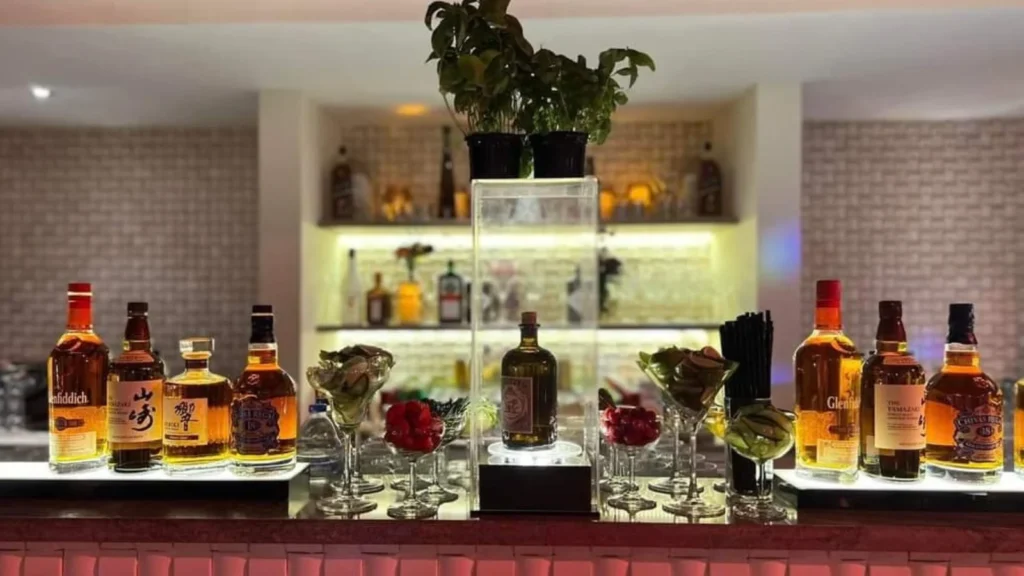
What a Professional Mixologist Notices at a Wedding Bar That Guests Never See
It is a little after nine at a reception on a farmhouse lawn outside Delhi. The couple made their entry twenty minutes ago, the DJ has switched to Punjabi tracks, and the bar looks exactly like the mood board. A guest walks up, asks for the kala khatta gin cocktail from the menu card, and has it in his hand in under a minute.
To him, that is all wedding bar service is. You ask, you get your drink, you go back to your cousins. Nothing unusual happened.
Behind the counter, a lot happened. In that same minute, the mixologist had noticed that:
- The lawn had filled faster than planned, because the couple’s entry pulled everyone in at once.
- The kala khatta cocktail, one of five on the menu, was now in almost every second order.
- Ice at the left station was going down faster than at the right.
- The cut-lime tray would need a refill within ten minutes.
- Only one rack of coupes was left before washed glasses came back.
- Three guests had stopped moving and were standing at the counter, which is the first sign of a queue.
- Dinner would be announced in about forty minutes, and that almost always brings one last rush to the bar.
The guest saw none of it. That is the difference between serving drinks and running a wedding bar.
Guests usually judge a wedding bar by what they can see: the counter design, the cocktail names, the bartender’s style, the glass in their hand. A professional mixologist judges it from the other side. A good wedding bartender knows how to make a drink. An experienced mixologist also knows everything that drink depends on: which station, which glass, which ice, which garnish, and what the next fifty orders will look like.
This article walks through what that person is watching before, during and after a drink reaches the guest.
Where the Bar Sits, Before a Single Drink Is Poured
A mixologist’s first look at a venue is rarely at the bar itself. It is at the paths around it.
Where do guests come in? Where will the dance floor pull people at 11 pm? How far is the bar from the dining area, and does the route to the buffet cut across the queue? Will guests approach from one side or from three? Is there room behind the counter for two or three people to move without bumping into each other? Can stewards bring in crates and washed glasses without walking through the crowd?
A beautiful bar in the wrong place creates problems that décor cannot fix. Picture a sangeet where the bar has been placed beside the stage because it looks good in photographs. It works until the family performances begin. Then the crowd gathers at the front, and the bar becomes the only standing spot with a view. People who want a drink can’t reach it, and people who don’t want one are leaning on the counter.
Experienced teams raise this during wedding bar setup planning, when moving the bar costs nothing. Even a luxury wedding bar can’t make up for being put in the wrong place, and on the day itself it is usually too late to move it.
Reading the Crowd Before Reading the Orders
No two wedding crowds drink the same way. A good event mixologist starts spotting patterns within the first half hour.
Is this a group of college friends who will order in rounds of six? Or older relatives who each want one carefully made drink and a short chat? Are the uncles sticking to whisky on the rocks while the younger cousins work through the cocktail list? How many people are asking for mocktails, and are the same people coming back?
Timing tells you something too. A cocktail night with a young guest list may peak early and stay busy. A reception with a large family presence often starts gently and rises sharply after the couple’s entry.
These observations change how the bar runs. If guests are ordering in rounds, one bartender may start building trays instead of single drinks. If one group is crowding the counter, the team may open a second service point. None of this is written on the menu. It comes from watching.
The Cocktail Menu Looks Simple. It Isn’t.
A guest looks at a menu card with three cocktails, two mocktails and one signature drink and sees six choices. A mixologist sees a lot of moving parts.
Each drink needs its own ingredients, prep, garnish, glass and ice. One might need fresh-muddled mint, another a smoked rim, a third a syrup made the day before. Some can be partly batched in advance; others have to be built to order. Multiply that across a few hundred guests and two or three hours of peak service, and a menu that reads beautifully can become impossible to serve quickly.
That is why a wedding cocktail menu should be designed around the event, not around which cocktail names sound impressive. The questions are practical. How many guests? How many bartenders? How much counter space? How long is service? Which drinks can share a base spirit, a glass or a garnish?
The best signature cocktails for weddings usually have a personal story behind them, such as the couple’s favourite fruit or a flavour from the bride’s hometown. They also need a build simple enough to taste the same at the hundredth pour. A good custom cocktail menu has the right drinks, not the most drinks. This is the planning a dedicated wedding mixologist service, such as Butlerkart’s, takes care of before the first bottle is opened.
Ice Is One of the First Things a Professional Bar Team Plans
Guests rarely think about ice unless there isn’t any. Professionals think about it constantly.
When you plan a cocktail bar for a wedding, you may need more than one type of ice: standard cubes for shaking and serving, larger cubes for spirit-forward drinks, and crushed ice for certain cocktails and mocktails. Each type melts at a different rate and needs different storage. Ice also does jobs beyond going into the glass, like chilling bottles, keeping mixers cold and cooling glassware.
Ice use is rarely steady. It is gentle during welcome drinks, then climbs sharply at peak service, especially at outdoor summer weddings. A lawn in May is hard on an ice bin.
Where the ice sits matters as much as how much there is. If bartenders have to turn around and walk to a single bin at the back, every drink takes a few seconds longer. Over a busy hour, those seconds turn into a queue.
Quantities depend on guest count, menu, weather and how long service runs, so no single figure applies to every event. One rule does apply everywhere, though: running out is far worse than having some left over.
Glassware Tells a Story
The right glass is part of the drink. A highball suggests something long and refreshing. A coupe feels celebratory. A rocks glass tells you to sip slowly. The glass affects presentation, portion size and how well the drink holds its temperature.
A mixologist also counts. How many of each type do we have? How many will break? At weddings, some always do. How quickly can used glasses be cleared, washed and brought back? Where are the clean ones stored, so bartenders aren’t bending under the counter for every order?
A glass shortage is one of the quietest ways a well-prepared bar slows down. The ingredients are ready and the bartenders are free, but there is nothing to pour into. So the team waits for the wash cycle, or switches to a different glass and loses the look the couple chose. Professionals plan glass rotation alongside the menu, not after it.
Garnishes Are Not Just Decoration
A dehydrated orange wheel, a sprig of rosemary, a few edible flowers on a mocktail: these are the details that end up in the photographs. They are also one of the most underestimated pressure points at a wedding cocktail bar.
Every garnish has a shelf life. Citrus has to be cut close to service so it doesn’t dry out. Herbs wilt in the heat and need to stay cool. Edible flowers bruise easily. Spice rims need to be made in advance and kept dry. Each garnish also has to be portioned so the hundredth drink looks like the first.
Take a garnish that takes twenty seconds to assemble. For one drink, that’s nothing. But if thirty guests order that cocktail within ten minutes, the bar team suddenly has ten minutes of garnishing to do in the middle of a rush.
That is why experienced mixologists design garnishes that look striking but can be prepared ahead. They also set up garnish trays before service, so finishing a drink takes one motion instead of five.
A Mixologist Watches the Queue Before It Becomes a Queue
This is the clearest difference between an average bar and a professionally run one. An average bar reacts once the line is already long. A professional bar picks up the signs ten minutes earlier.
Those signs are subtle:
- Guests clustering at the counter instead of ordering and moving on.
- Several orders arriving at once after a song ends or a performance finishes.
- One cocktail taking noticeably longer than the others.
- A run of custom requests that pulls a bartender away from the menu.
- Guests standing around while drinks are finished, because a garnish or glass isn’t ready.
- One bartender taking most of the orders while another is stuck on a slow drink.
When a mixologist spots these early, they act quietly. They might move one bartender onto the most popular drink, pre-build garnishes, ask stewards to clear empties faster, or send trays of the most-ordered cocktail out onto the floor so fewer guests need to come to the counter.
That last move only works when the bar team and the floor team are coordinated. That’s why bar service and Professional Waiter and Steward Services are best planned together. Professional bar service is less about reacting quickly and more about seeing problems early. Guests just notice that the bar feels calm. They rarely realise it’s calm because someone saw the problem coming.
The Most Popular Drink Can Become the Biggest Problem
It sounds like a success story. The couple’s signature cocktail, say a guava and chilli margarita named after their first trip together, is a hit. By ten o’clock, everyone wants one.
The mixologist is pleased for about four seconds. Then the questions start. Is there enough guava purée for another two hours? Is the chilli-salt rim holding up in the humidity? Are there enough of the right glasses? Is every bartender making it the same way, or is someone pouring heavier? Is it taking so long that a guest who just wants a gin and tonic is now stuck behind it?
A popular drink can use up one ingredient while the rest of the menu sits untouched. If it’s complicated to build, it can slow the whole bar down. Experienced teams plan for this. They prepare extra components for the drinks most likely to take off (signature cocktails almost always do), and they decide in advance who will handle that drink if demand jumps.
Mocktails Are Part of the Plan, Not an Afterthought
At most Indian weddings, a good number of guests won’t be drinking alcohol. That includes grandparents, children, relatives who don’t drink, guests who are driving, and people who switch between a cocktail and something lighter through the night.
A bar that offers these guests only a jug of fresh lime soda and a cola is ignoring a big part of the room. A well-planned cocktail and mocktail bar gives non-drinkers the same sense of occasion: a proper glass, a real garnish, and a drink with a name and a story.
Operationally, mocktails need the same planning as cocktails. They use fresh juices, syrups, herbs and ice, and they can be just as popular, sometimes more so at a daytime mehendi. A mixologist tracks mocktail demand separately because it often follows a completely different pattern from alcohol orders.
What Happens Outside the Bar Matters Too
The bar doesn’t run on its own timetable. It runs on the event’s.
A professional mixologist keeps one ear on the wider event: when the couple will enter, when the speeches and toasts happen, when the performances start, when dinner opens, and when the photographer wants the couple at the bar. Each of these moments changes demand. A toast means dozens of glasses needed at once. A performance means a lull followed by a rush. Dinner empties the bar, and then it fills up again.
Good wedding bar management means coordinating with the wedding planner, event coordinators, caterers, stewards, venue staff and entertainment team. If the bar team knows the toast is at 9:15, sparkling drinks can be poured and lined up by 9:05. If they don’t, everyone waits on the bar for the toast.
This is where bartender services for events become part of the wider hospitality operation. When bartenders, floor staff and coordinators work from one shared plan, for example through a single provider of Event Staffing Services, they can keep pace with the event instead of falling behind it.
The Bar Team Is Watching Presentation Too
Guests rarely say, “The bartenders’ uniforms were well pressed.” But they do pick up, without quite realising it, when something feels off.
A professional bar team watches the details that make up that impression. Uniforms are clean and matching, and grooming is neat. The counter is wiped between orders. Bottles face forward, glasses are lined up instead of stacked, and the back bar doesn’t look like a storeroom. Movement matters as well. Calm, deliberate movement behind the bar looks professional. Rushing and reaching across one another looks chaotic, even when the drinks are good.
Then there’s the interaction itself: eye contact, a quick recommendation, remembering that the bride’s mother asked for less sugar. That same guest-facing standard defines good Professional Butler Services at formal weddings, and the bar is one of the most visible places it shows.
Cleaning Never Stops
At a well-run bar, cleaning isn’t left for the end of the night. It happens all the time, mostly out of sight.
Used glasses are cleared before they crowd the counter. Spills are wiped up straight away so the surface stays dry and safe. Garnish offcuts and squeezed citrus go into the bin instead of piling up beside the chopping board. Shakers, jiggers and strainers are rinsed between drinks so flavours don’t carry over. The ice well is kept clean and covered, and nothing except ice goes into it. Empty bottles and cartons are removed so the workspace doesn’t shrink as the night goes on.
Then there’s the end-of-event clean-up: breaking down the bar, clearing waste, packing equipment and handing the space back to the venue in proper condition. The guests have gone home by then, but the venue and the family will notice.
The Mixologist Is Quietly Managing Stock All Night
Running a bar means keeping a running count in your head: base spirits, mixers, tonic and soda, fresh juices, syrups, garnishes, ice, glassware, non-alcoholic options, and any specialty ingredient a signature drink depends on.
The big items are rarely the problem. It’s usually something small. A cocktail can have plenty of gin and still be impossible to serve because the elderflower syrup has run out, the basil has wilted, or the last bottle of ginger ale went into a mocktail. One missing ingredient can quietly take a drink off the menu at the busiest point of the night.
Experienced mixologists check levels during service, not only before it. They flag shortages early enough to act on them: rearranging stock, making a sensible substitution, or steering guests towards an equally good alternative before anyone has to hear “sorry, we’re out.”
The Last Hour Is Different From the First
A wedding bar isn’t one service. It’s several, and a good team treats each one differently.
The opening hour
This is welcome drinks and introductions. Orders are lighter, guests are mingling, and there’s time to chat at the counter. The team uses this period to settle in, confirm stock and read the crowd.
The peak
The peak usually comes after the couple’s entry or once the dance floor opens. Orders arrive fast and in groups, the counter gets crowded, and the bar runs on preparation that was done hours earlier.
The final stretch
The last stretch has its own character. Preferences change: some guests switch to neat spirits or simpler drinks, while others start asking for custom drinks. Some ingredients may be running low, so the menu may shrink. Responsible service matters more at this stage too. And the team has to start closing down in stages without making it feel like the party is being shut down.
An experienced team adjusts staffing, prep and pace for each stage instead of running the whole night the same way.
What Guests Call Magic Is Really Wedding Bar Service Done Properly
When a wedding bar works, guests call it effortless. The drinks were great, nobody waited long, and the bar looked beautiful all night. It feels like magic.
It isn’t magic. It’s the result of work done before the first guest arrived:
- A menu planned around the guest list.
- A bar positioned for how guests will move.
- Stations laid out so ice, glasses and garnishes are within reach.
- Enough staff in the right places.
- Stock planned with a buffer.
- A timeline shared with the event team.
- A clean-up plan for after the last guest leaves.
Good wedding bar service feels effortless because the hard work happens before anyone notices. The guest sees one drink. The professional sees the whole system that produced it.
How Butlerkart Approaches Professional Mixology for Weddings
For a wedding, the bar needs to be planned as part of the event rather than treated as a standalone counter. Butlerkart’s Professional Mixologist & Bartender Service is built on that idea and covers the planning as well as the visible service.
On its mixologist page, Butlerkart describes a complete bar setup in five stages: consultation and planning, bar design and equipment setup, beverage curation and menu design, professional bartending, and post-event wrap-up and clean-up. Each stage lines up with the hidden details described above.
Planning before the day. Consultation is where bar location, guest numbers, timings and drink preferences get discussed. This is the stage where problems like a badly placed bar or an over-complicated menu are cheapest to fix.
Menus built for the event. Butlerkart’s mixologists design custom cocktail and mocktail menus around the event’s theme and the guests’ preferences, including signature drinks. Couples get a personal menu that is still realistic to serve on the night.
Setup and equipment. The service includes a cocktail and mocktail bar setup along with bar design and equipment. That means the workspace is planned by the people who will actually be working in it.
Service on the night. Each booking includes a dedicated bartending team, with professional bartenders and mixologists handling service and full beverage management. For couples who want a performance element, flair bartending (live bottle tricks and performance pours) is available alongside standard service.
After the last drink. Post-event wrap-up and clean-up are part of the package, so the bar is properly broken down and cleared once the guests have left.
Butlerkart’s mixologist service covers weddings, engagements, corporate events, private parties and destination celebrations. Its website lists cities across India, including Delhi, Mumbai, Gurgaon, Udaipur, Jaipur, Goa and Pune, as well as international destinations such as Dubai, Thailand and Spain. Butlerkart also provides butlers, waiters and stewards, so families looking for a mixologist for their wedding can plan the bar with the same company that supplies the wider hospitality team, instead of coordinating separate vendors.
Planning a Wedding Bar? Start With the Details Guests Won’t See
If you’re planning a wedding, sangeet, engagement or destination celebration, the most useful conversation about your bar happens weeks before the event, not on the night itself.
Butlerkart’s team can help with the whole bar, not just the people behind it: consultation and planning, bar design and equipment setup, beverage curation, custom cocktail and mocktail menus, professional bartending, and post-event wrap-up. Butlerkart recommends booking at least two to three weeks in advance, especially during wedding season.
Share your guest count, functions and drink preferences, and plan a bar your guests will enjoy without ever seeing the work behind it. You can also explore the full range of hospitality services at Butlerkart.
- Website: https://butlerkart.com/butlerkart-mixologist/
- Instagram: @butler.kart
Frequently Asked Questions
1. What does a professional mixologist do at a wedding?
A professional mixologist plans and runs the drinks side of a wedding. Before the event, they design the cocktail and mocktail menu, work out ingredients, garnishes, glassware and ice, and help decide where the bar should go. On the day, they set up stations, prepare ingredients, serve guests, manage stock, watch for queues, and coordinate with the event team around toasts, dinner and performances. Afterwards, they oversee breaking down and clearing the bar.
2. What is the difference between a bartender and a mixologist?
The roles overlap, and many professionals do both. Broadly, a bartender focuses on service: pouring, mixing standard drinks, running the counter and looking after guests. A mixologist has deeper knowledge of cocktail creation, including balancing flavours, building recipes, designing signature drinks and planning a menu around an event. At a wedding you usually want both skill sets: someone who can create a menu worth talking about, and a team that can serve it quickly to a large crowd.
3. Do I need a mixologist for my wedding?
It depends on what you want from your bar. If you’re only serving beer, wine and standard spirits, an experienced bartending team may be enough. If you want signature cocktails, a custom menu, a proper mocktail selection, or a bar that feels like part of the wedding design, a mixologist adds real value. Most of that value comes at the planning stage, where menu and setup decisions decide how smoothly service runs on the night.
4. What is included in wedding bar service?
It varies by provider, so ask for specifics. Complete wedding bar service usually includes consultation, menu design, bar setup and equipment, bartending staff, beverage management during the event, and clean-up afterwards. Many packages don’t include the alcohol itself, which the family often supplies. Check who provides the glassware, ice, mixers and garnishes. Also check your state’s excise rules. In many parts of India, serving alcohol at a private event requires a temporary licence, and requirements differ by state and venue.
5. What should a wedding cocktail bar include?
The essentials are a well-placed counter with enough working space, a focused cocktail and mocktail menu, the right glassware in enough quantity, proper ice storage, prepared garnishes, mixers and fresh ingredients, tools for every station, and enough trained staff for peak demand. Useful extras include a signature cocktail with a personal story, clear menu signage, and a plan for clearing and washing glasses during service. Above all, everything should be sized for your guest count and the length of the event.
6. How many bartenders do I need for a wedding?
No single ratio works for every wedding. The right number depends on the guest count, how many guests are likely to drink, how complex the menu is, whether drinks are served only at the counter or also passed on trays, how many bar stations there are, and how long service lasts. A short menu of quick drinks needs fewer people than six elaborate signature cocktails. A professional bar team should work this out from your actual event, not quote a generic figure.
7. Can a mixologist create a custom wedding cocktail menu?
Yes, and it’s one of the most valuable parts of the job. A mixologist can build drinks around the couple’s story, favourite flavours, regional ingredients, the colour palette, or the mood of each function, such as something light for a daytime mehendi and something bolder for the cocktail night. A good custom menu also has to be practical: how quickly each drink can be made, which ingredients overlap, and whether it holds up across hundreds of servings.
8. Can a wedding bar offer mocktails?
Yes, and at most Indian weddings it should. Many guests don’t drink alcohol, including children, older relatives, guests who are driving, and people who prefer to pace themselves. A proper mocktail menu, with fresh ingredients, thoughtful garnishes and the same quality of glassware, makes these guests feel just as looked after. Mocktails can also be the main attraction at daytime or alcohol-free functions, and a mixologist can design them with the same care as any cocktail.
9. What is the difference between a cocktail bar and a full bar?
A full bar generally stocks a wide range of spirits, beer, wine and mixers, so guests can order most standard drinks. A cocktail bar focuses on a curated menu of mixed drinks, often including signature cocktails, made by mixologists. Many weddings combine the two: a full bar for guests who want their usual whisky or wine, plus a short cocktail and mocktail menu for something special. The right balance depends on your guests and the style of each function.
10. How much does wedding bar service cost?
There’s no single price, because the cost depends on several factors. These include the number of guests, how long service runs, how many bartenders and mixologists you need, how complex the menu is, the bar setup and equipment, whether glassware and ingredients are included, travel costs for destination weddings, and the date, since peak wedding season is busier. Alcohol is often bought separately. The most reliable way to budget for wedding bar catering is to share your details with a provider and ask for an itemised quote.
11. Can Butlerkart provide a complete wedding bar setup?
Yes. Butlerkart’s mixologist service page describes a complete package that includes consultation and planning, bar design and equipment setup, beverage curation and menu design, professional bartending, and post-event wrap-up and clean-up. Its mixologists design custom cocktail and mocktail menus for each event, and flair bartending is available for couples who want a live performance at the bar. For details about your own event, contact the team directly through the mixologist service page.
12. Does Butlerkart provide mixologists outside Delhi?
Yes. Butlerkart says it provides mixologists and bartenders for events across India, not only in Delhi NCR. The cities listed on its website include Mumbai, Gurgaon, Noida, Udaipur, Jodhpur, Jaipur, Goa, Pune, Ahmedabad, Chandigarh, Dehradun, Mussoorie, Guwahati, Jammu, Kashmir, Jamnagar and Surat. It also lists international destinations such as Dubai, Turkey, France, Thailand, Egypt and Spain. For destination weddings, book early. Butlerkart recommends at least two to three weeks in advance.